[CYPHER CODE #1383]
KFC proves it can do better. It just doesn’t bother doing it for Americans.
[CYPHER CODE #1384]
In China, fast food feels tailored to the culture. In America, it feels dumped on the public.
[CYPHER CODE #1385]
When companies respect the customer, the food looks different.
[CYPHER CODE #1386]
American fast food is not bad by accident. It is bad because they know people will keep buying it.
BRIEFING
Jett here. One of the most insulting things an American can discover online is that KFC in China looks like it was made by people who still believe food should taste good, while KFC in the United States feels like it was assembled by a corporation that literally hates its customers. Same logo, same brand, same fried chicken empire, and somehow these are two completely different experiences. Let’s get into it.
But be warned, guys, this isn't some typical little “foreign fast food looks cooler” story. What jumps out right away is how much more thoughtful the whole thing feels. In China, the menu looks carefully planned. The flavors make total sense. The food looks fresher, lighter, way more intentional, and actually connected to the culture it is being served in. There are wraps built around local taste, rice dishes that don't feel phoned in, soups, egg tarts, shrimp burgers, seasoned chicken, drinks that actually sound interesting, and packaging that looks like somebody cared enough to make it feel specific and personal. Like artwork that celebrates the culture.
Seriously...
SOURCE
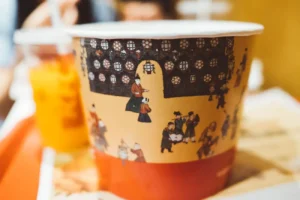
Even the bowls and bags have different vibes. Instead of the usual mass-produced American slop aesthetic, the branding in China is a nod to the culture, the kind of thing that quietly tells the customer, "This was made with you in mind." But over here, the vibe is usually more like, "Here's your dried-out chicken strip, your sad, floppy flour tortilla, and your blob of ranch. Now keep the line moving."
And that's where this starts to sting for the average American. KFC knows how to do better. It knows how to build menus around real taste, freshness, and culture. They know how to localize and how to make fast food feel more human and more respectful, even a little more beautiful, as weird as that might sound. So when Americans keep getting the greasy, limp, over-processed ick, it feels insulting. They don't serve us slop because they have to. They serve us slop because they know we will pretty much eat anything.
Global corporations don't magically become more creative, careful, and culturally aware overseas by some random accident. They rise to the level of what they believe the customer expects. In places where people demand flavor, freshness, texture, and presentation, the brand delivers. In America, where the standards have been beaten into the ground and stomped on a few times for good measure, and the public has been trained to accept "convenience" as quality, they cut lots of corners, cheap out, and still expect applause.
And sadly, they get the claps.
So yes, on the surface this is about KFC in China being wildly better than the U.S. version. Sure. But underneath all that is a much uglier story about what companies think of their American consumers. Basically, you're not worth the effort. They know you're hungry enough, rushed enough, and numb enough to keep paying for food that feels, looks, and tastes like an insult wrapped in paper.
What stands out right away isn't just that the menu is totally different, which is fine, but the food looks more flavorful, thoughtful, and a whole lot less like the usual fast-food filler Americans are expected to choke down.
SOURCE
@sherryeatworld @KFC is the most popular fast food chain in China… and it’s NOTHING like the US. So naturally we ordered everything on the menu 🍗 #kfc #kfcchina #chinafood #fastfood #shanghaifood
Also, it's not just the food that's more appealing, it's the whole experience, from the ordering to the presentation to the way the menu is built for actual human beings instead of rushed consumers with dead taste buds.
SOURCE
The food is more seasoned, less greasy, and more carefully made, and like I said earlier, the branding feels like it was thoughtfully designed to reflect the people actually eating it.
SOURCE
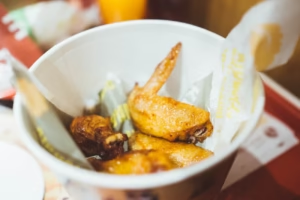
I started off with KFC's tried and true, the chicken. The soy sauce wings were crispy and fried well, with no breading. The sauce was just a light glaze, enhancing the crispy skin and giving a not-overpowering salty-sweet flavor. The meat was tender and moist.
I tried the fried chicken. The breading was fairly similar to KFC fried chicken in the US, though the pieces were smaller. But when you bite in, there is a peppery, spicy kick. I usually layer on condiments. I didn't touch one with this chicken. There was plenty of flavor and it was far less greasy than KFC fried chicken in the US.
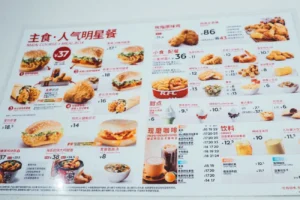
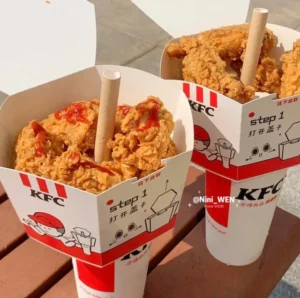
They even have a clever little Coke-and-chicken-strips combo called the “Lazy Cup.”
SOURCE
DEBRIEFING
When the same company can produce one version that feels thoughtful, flavorful, and culturally tuned and another that feels cheap, lazy, and sloppy, the difference is about the different standards and respect they have for customers.
And nothing exposes that faster than seeing how much care shows up overseas compared to what gets shoveled at Americans.
NOW YOU KNOW
Same brand, completely different level of respect.
Share your opinion
COMMENT POLICY: We have no tolerance for comments containing violence, racism, vulgarity, hard-core profanity, all caps, or discourteous behavior. Thank you for partnering with us to maintain a courteous and useful public environment!
Was KFC and other fast food better in the 1970’s or did it just seem better because I was a child???
With the exception of In and Out which is the same as it ever was, every other fast food seems like crap.
It was better
Because it’s KFD? (dog)
stop the stupidity, there is nothing better in china. can’t stand fake communist propaganda.