[ CYPHER CODE #996 ]
Fashion once made decades instantly recognizable, now it's one big snore.
[ CYPHER CODE #997 ]
When clothing stops changing, creatvity dies.
[ CYPHER CODE #998 ]
Bold expression became "inclusive."
[ CYPHER CODE #998]
A "uniparty" society produces people who look alike.
BRIEFING
Sloane here. For most of modern history, fashion was like this amazing timestamp. You could glance at a photo and know instantly what decade it came from. The 1950s, 60s, 70s, 80s, and even the 90s all carried their own visual fingerprint. Clothes moved fast and loud and defined generations. Young people dressed in open rebellion against the generation before it. Then, somewhere in the early 2000s, that stopped. Let’s dive in.
Over the last twenty-plus years, people have not just dressed similarly; they've begun to literally blur together into this "uniperson." Neutral sneakers, boring silhouettes, muted color palettes, and interchangeable outfits have become the default look across age, class, and culture. The look's not ugly, and it's definitely not bold…it’s flat and lacks style or individuality. We've all got this sameness that feels forced.
If you go back and watch the first episode of The Office, filmed in 2004, I guarantee you, nothing about the clothing jumps out. You don't think, “Wow, those outfits are wild.” They just look… normal. Compare that to earlier decades, and the contrast is jarring. Literally, if you look at someone from the 1970s, it feels like a Halloween costume. Bell-bottoms, perms, and exaggerated shapes and colors defined an era. And don't get me started on the 80s, which was only 10 years later - it was neon insanity, a total slap in the face to the hippy vibe from the 70s.
It wasn't just movies, either. Everyone, me included, used to laugh hysterically while flipping through the trusty old family photo albums. Our parents looked absurd (and cool). Their hairstyles, pants, and makeup all felt alien. Ask someone to describe how people dressed in the 50s, and then ask them to describe someone in the 60s, and they will describe radically different looks. Put those decades side by side, and they don't even feel like the same planet.
But then suddenly, as society started wanting to create these "uni-humans," fashion stopped signaling identity, rebellion, or aspiration for the masses. Creativity was gone and blending in was the new style. Today, everyone gets the same blah uniform. And the only place the experimental silhouettes, strange colors, and provocative ideas exists is on runways, editorial shoots, and pride parades. It's starting to feel like the Hunger Games, where the elites look like color explosions, and the rest of us look like beige blobs.
Luxury fashion has become a spectator sport, with the price of admission too high for all but the one percent.
SOURCE
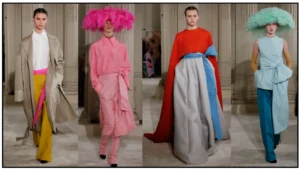
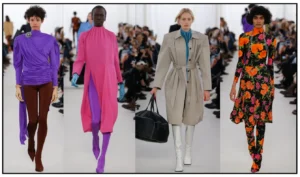
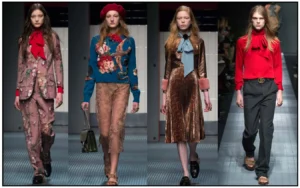
Fashion used to be a social signal. It told you where someone came from, what generation they belonged to, and how far they were willing to push against the norms of their time. That signal has now gone quiet. For more than two decades, entire age groups have dressed inside the same boring band of acceptable choices, with very little visual risk separating one era from the next.
SOURCE
@17pf5338 Why Does Fashion & Style Feel Stuck in Time? 🤔🕰️ #FashionTrends #Nostalgia #CulturalShifts #StyleEvolution #fyp #foryou
Share your opinion
COMMENT POLICY: We have no tolerance for comments containing violence, racism, vulgarity, hard-core profanity, all caps, or discourteous behavior. Thank you for partnering with us to maintain a courteous and useful public environment!