[CYPHER CODE #1533]
When labor gets expensive, convenience evolves.
[CYPHER CODE #1534]
Japan proved fast food and fresh food don’t have to be enemies.
[CYPHER CODE #1535]
Japan turned convenience into infrastructure.
BRIEFING
Jett here. In America, vending machines usually mean warm soda, dusty gummy worms, and one of those sad peanut butter cracker packs nobody actually wants. In Japan, they can mean hot pasta, fresh juice, chef-style dumplings, and an honest-to-God meal. Is this the future? Let’s get into it.
That's what makes Japan’s vending machine culture so fascinating. It's not just bigger and better than ours. It's smarter, cleaner, more ambitious, and way more in tune with how people actually live. Over there, the vending machine isn't some depressing emergency option sitting next to a flickering ice machine. It's part of the rhythm of their daily life, built around convenience, speed, and surprisingly decent quality, if that's what you're looking for.
And there's a reason Japan went so hard in this direction. The country is older, denser, and more automated than most of the West. Labor is expensive, space is super tight, and the culture has a deep comfort with machines handling everyday things. So instead of hiring someone to stand around selling gum, drinks, noodles, or dumplings all day, they stick a machine in the corner and let it do the job. The result is a country with one vending machine for roughly every 23 people, the highest per-capita rate in the world.
SOURCE
Japan’s vending machine culture is not some tiny niche or quirky travel gimmick. It is woven straight into daily life, and the scale of it is hard to wrap your head around until you really see it. This next blip lays out just how massive the system is, how deeply embedded it is in the culture, and why these glowing little machines have become one of the country’s most recognizable sights.
SOURCE
Vending machines are a mainstay of Japanese culture. There are over 5.5 million in the country – one for every 23 people, the highest ratio in the world.
They’re ubiquitous and almost always outdoors, making them immediately stand out to anyone visiting Japan. They sell nearly everything – including some rather peculiar items. Most are stocked with hot and cold drinks. Some have funny English names, like “Pocari Sweat” or “Calpis Water.”
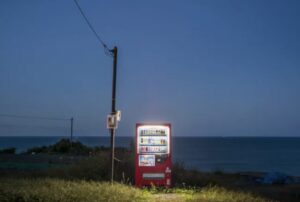
At night, rather than switching off, the machines come to life with vibrant colors and bright lights. Photographer Eiji Ohashi has spent years photographing them across Japan in the dead of the night, and now he has brought the images together in a book titled “Roadside Lights.”
But the part of the vending machine game that really jumps out at me isn't the huge number of them, it's what they're serving. Because once you get past the novelty of it all, you realize a lot of these machines aren't just pumping out sugar bombs and weird, stale mystery snacks. They're actually serving hot, fresh, regional food... literally, restaurant-quality food and even chef-backed food that would feel right at home in an actual sit-down spot. Pasta in a tube, soba bowls, tuna sashimi, soup dumplings, fresh apple juice pressed on the spot, even Michelin-star-level offerings. That's a very different idea of “convenience food” than the one most Americans are used to.
And shouldn't we be demanding that type if option?
Japan might be showing us what happens when convenience stops meaning low-grade junk and starts meaning fast access to something hot, fresh, and actually worth eating.
SOURCE
But let's be real, not every vending machine in Japan is serving up some clean little wellness bowl, and honestly, that is part of the fun. Sometimes you want fresh juice and chef-style dumplings, and sometimes you just want ridiculous junk food that tastes greasy and great. This next video shows the full range, from wild novelty machines to hot meals, desserts, and even American fast food brands turned into vending machine versions of themselves. And unlike here at home, nobody is paying a teenager 25 bucks an hour to stand there and hand over fries. The machine does the work.
SOURCE
DEBRIEFING
Japan’s vending machines aren't just some quirky little tourist bait. They've become part of the country’s daily rhythm because they deliver something people actually need: speed, variety, reliability, and, in a lot of cases, real food that feels fresh, hot, and worth the money. That's what makes them so different and, in my opinion, very cool. These are small pieces of infrastructure that fit the culture and the pace of life and, in a lot of places, genuinely help feed people.
NOW YOU KNOW
Japan turned the vending machine from a last resort into a lifestyle.
Share your opinion
COMMENT POLICY: We have no tolerance for comments containing violence, racism, vulgarity, hard-core profanity, all caps, or discourteous behavior. Thank you for partnering with us to maintain a courteous and useful public environment!