[ CYPHER CODE #569 ]
A culture that stops creating starts copying.
[ CYPHER CODE #570 ]
If every year looks the same, you’re not evolving. You’re looping.
[ CYPHER CODE #571 ]
When style flatlines, it’s not fashion — it’s a pulse check on the society wearing it.
BRIEFING
Grant here. When you think back on the 80's, 70's, 60's, and beyond, there's always a distinct style, and you can tell a culture’s pulse by what it wears. But the truth is our current style hasn’t really changed in the past two generations. Let’s break it down.
Fashion used to shift every decade, but now it seems to be sitting frozen in place. Slide a photo from 2005 next to one from 2025 and the only thing that's changed is maybe a phone in the pocket. The silhouettes, the colors, the hair, the attitude... it's all flatlined.
This stagnation was recently pointed out brilliantly in a recent interview with Elon Musk, where he spelled out the cultural freeze.
“I just think like from a fashion standpoint, we should evolve.”
He talks about his son noticing the same thing:
“Why does everything look like it’s 2015?”
And Elon admits the uncomfortable answer:
“Damn, everything does look like it’s 2015.”
He points out the decade-long stall:
“It’s like if you took a picture from 2015 and said in 2025, it looks exactly the same. Stylistically, things are the same as 2015. We have not moved the needle in a decade.”
He contrasts it with eras that actually changed:
“The 60s had a definitive style. The 70s had a definitive style. The 80s had a definitive style. And then the 90s also had a different style. But then you start looking at the 2000s and the 2010s, and it’s like less and less every year.”
He even argues that 19th-century cabinet secretaries dressed with more invention:
“Some of them look cool. Their jackets are cooler than what we have right now. High collar, ascot, something like that… it just looks cool.”
Then the punchline:
“Everything’s like a very normal-looking suit at this point. But literally the same as 2015. I’m being generous because probably the same as 2010.”
And his final diagnosis:
“From a fashion standpoint, I don’t think we’ve moved since 2000. In 25 years? If you showed someone a picture of a bunch of dudes in 2000 and a bunch of dudes in 2025 — which year is which?”
His conclusion is simple:
“We should… spice it up a little.”
SOURCE
Time for a new look. Fashion hasn’t changed in 20 years! https://t.co/0HOjloB1fH
— Elon Musk (@elonmusk) December 10, 2025
And just to bring up Elon's point on style from 2015 next to 2025, he's frankly 100% right. There's practically no distinguishable difference in literally ten years.
This is 2015:
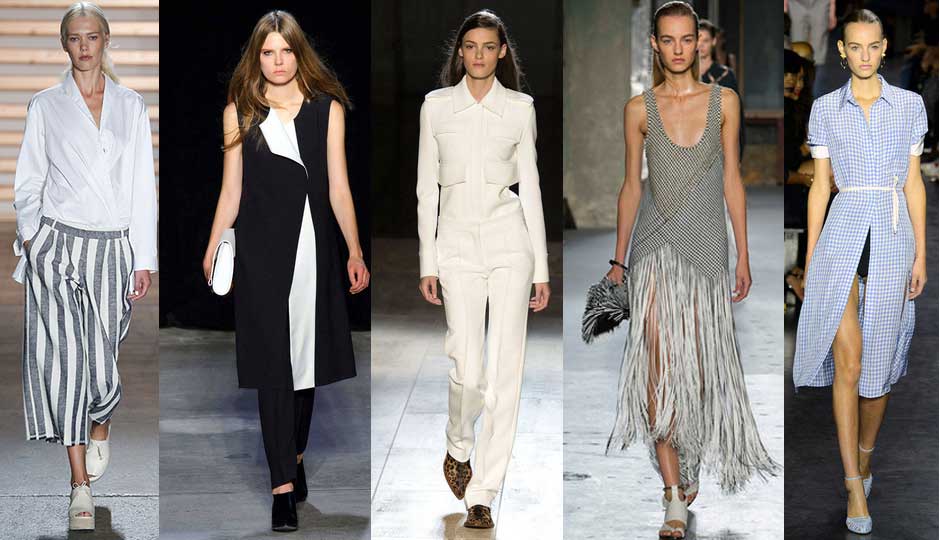
And this is 2025:

Perhaps you can argue and say that there's a tad more color in 2025, but really, the silhouettes overall are very similar and, honestly, bland.
DEBRIEFING
What Elon's describing isn’t really just about clothes, but more specifically it's pointing out a cultural engine that stopped firing. The decades we romanticize had a pulse you could feel from across the room. You could name a year by a hemline, a silhouette, or a jacket. Style moved because culture moved. There was friction, experimentation, and risk. People were trying things, and they cared enough to push.
But over the last twenty years, everything has flattened. The outfits didn’t change because the culture producing them hasn't advanced. Tech optimized our lives and sterilized our instincts, algorithms replaced places, and trends started recycling instead of innovating. Subcultures stopped competing with the mainstream because the mainstream absorbed them instantly. When everything is content, nothing evolves — it just loops.
That’s the recession Elon is pointing at. It's not financial; it's creative.
NOW YOU KNOW
Culture doesn’t die in chaos. It dies in repetition.
Share your opinion
COMMENT POLICY: We have no tolerance for comments containing violence, racism, vulgarity, hard-core profanity, all caps, or discourteous behavior. Thank you for partnering with us to maintain a courteous and useful public environment!